
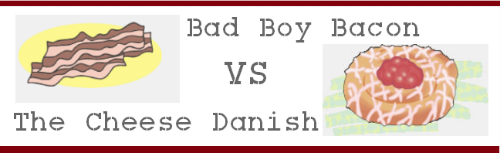
What a way to stir up controversy, angst and anxiety: At a health fair last week, we demonstrated Spinach Sauteed with Pears and Bacon. Yes, you read that right. We made a dish featuring none other than bad boy bacon. Not turkey bacon, not a vegetarian imitation, not a special lean variety, just good old pure bacon.
As the smell of frying bacon wafted through the exhibit area, people started drifting our way, sheepishly yielding to the scent of a food at once reviled and adored. Arriving at our booth, their bacon stories and angst poured forth. It was an interesting window into the conflict and confusion that permeates our food and health thinking. As we’ve all been taught, bacon is supposed to be a clear cut bad boy, and yet . . .
- I used bacon grown on a small family farm where the pigs are not confined to live in their own excrement, are fed a wholesome diet and aren’t pumped with growth hormones or antibiotics.
- The bacon had only four ingredients: pork, salt, spices and sugar (and the sugar and salt were nominal, just enough to accomplish the curing process.)
- I combined the bacon with two other pure, whole, real foods (pears and spinach) for a dish rich in nutritional benefits.
- The bacon was so lean it barely rendered enough fat to saute the pears and spinach, plus I used only 3 ounces of bacon to generously serve four people so each full serving contained only 3/4 of an ounce.)
- Because the bacon was so flavorful, no fancy preparations or ingredients were needed for great taste, i. e., this is a vegetable dish anyone could make on a weeknight
- And because the bacon tasted so good, the whole dish was irresistibly good, meaning that vegetable eating became a delightful experience and getting us exactly where we want to be: eating lots of vegetables and fruits because they taste so good.
Far from being a nutritional disaster, then, this scenario represents a nutritional success!
The moral of this story: real, whole foods were never and are not now the source of our nutritional problems. Manufactured and adulterated foods are the problem. And at the health fair, there was a perfect example of manufactured, adulterated food in the central exhibit area. There, as official foods of the fair, were grapes, orange segments–and trays of cheese Danishes that were being eaten without any conflict or angst. In fact, some visitors to our booth were munching a cheese Danish as they debated whether to partake of our bacon.
Did those pastries really deserve an honored position at the fair? Did they deserve to be eaten without at least a little angst? Take a look at the ingredient listing for a typical Danish:*
Enriched flour (wheat flour [translation: refined white flour], malted barley flour, niacin, reduced iron, thiamin mononitrate (vitamin B1), riboflavin (Vitamin B2), folic acid), water, vegetable margarine [palm oil, water, soybean oil, salt, mono- and diglycerides, artificial flavor, annatto (color), calcium disodium EDTA (preservative), Vitamin A Palmitate], sugar, high-fructose corn syrup, dextrose, coconut, corn syrup, palm oil, raspberry puree concentrate, yeast, egg yolk, whey (milk) wheat starch, soy flour, mono- and diglycerides, modified cornstarch, raspberries, salt, tapioca dextrin, soybean oil, natural and artificial flavor, orange juice concentrate, soy lecithin, pectin, sodium stearoyl lactylate, corn flour, maltodextrin, citric acid, gellan gum, calcium sulfate, potassium sorbate (preservative), calcium carbonate, xanthan gum, black currant juice, hydrogenated cottonseed oil, malic acid, nut paste, sodium citrate, cellulose gum, agar, sodium acid pyrophosphate, baking soda, egg whites, cornstarch, calcium citrate, artificial color, caramel color, sorbitan monostearate, glycerol monooleate, spice and color, azodicarbonamide, sulfiting agents (preservative)
Seriously? We’re supposed to eat things that contain stuff like this? They’re just manufactured products, like crayons, Play Doh, and craft glue. No one would suggest that you eat those things. So why eat manufactured products just because they are made with food grade commodities and shaped and colored to look like a food?
- Food grade commodity wheat is processed, refined and adulterated just like the filler material for Play Doh. The wheat is stripped of its natural nutrients, leaving a lifeless calorie material which is then sprayed with artificially created nutrients. Like Play Doh, the rich yellow color in Danish dough comes as more from artificial color than egg yolks.
- Like red crayons, the “raspberry” filling is mostly just industrially processed corn syrup colored with fruit juice concentrate and food dye. There’s maybe a thimbleful of real raspberries in the entire Danish.
- The snow white frosting drizzled artfully over the top is just white sugar in another form. Maybe it is less harmful than white glue, but it is no better for the body nutritionally.
This sounds so radical. Can it really be that all our yummy, supposedly healthy breakfast pastries aren’t really that good? Could it really be better to simply eat one or two real eggs, an ounce of pure bacon plus vegetables and fruit? Try and see for yourself! I’ve gravitated toward vegetable and protein breakfasts followed by a mid-morning, whole grain granola snack. I feel much better. Get easy ideas from my Tweets and remember this “radical” takeaway:
Healthful eating for wellness is a lot easier than you think: Eat just real, whole foods. Ditch the boxes unless they contain products made with only real, whole foods. Easy.
Next Time: But cheese Danishes taste so good! How do I resist?

0 Comments
Trackbacks/Pingbacks