
Two Articles, One Newspaper and the “Trans-Atlantic Diet” Mystery
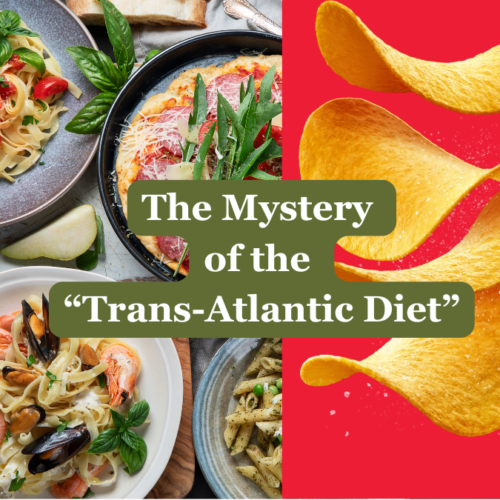
The first of two articles in the same newspaper(1) reported on the “Trans-Atlantic Diet.” Many travelers to Europe are experiencing surprising weight loss, better energy and improved health without any special eating or exercise program. Some eat exactly what they avoid in the U.S.: lots of bread, pasta, pizza, and fried foods.
So what gives?
Experts say that differences in food regulation are one explanation. In Europe, certain pesticides are banned unless the manufacturer proves their safety (which is known as the “precautionary approach.”) In the U.S. on the other hand, chemicals in pesticides are allowed unless we can prove that they cause harm. So there is likely less chemical residue for the body to deal with on the “Trans-Atlantic Diet.”
But I have to wonder if there isn’t more going on, which brings us to the second article. That article reflects on the style of eating common in the hurried and harried lifestyle in the U.S., where over 50% of calories come from ultra-processed foods (often consumed over the course of a day in multiple snacking episodes.)
This second article, “Artificial Intelligence Helps Perfect Pringle Chip-Making,” touted the Pringle manufacturer’s recent and very substantial investments of money, expertise and AI in its manufacturing process. Applying all these resources made it possible to monitor “the more than 200 parameters that go into creating the ‘perfect Pringle,’ ” from “the flour’s particle size and the dough’s humidity to the geography where the potatoes were harvested and the qualities of each potato delivery.”
Does this second article provide yet another explanation for the Trans-Atlantic Diet mystery? A good part of our calories are coming from foods made by machines that are tweaked and adjusted continuously by artificial intelligence to create an exactly homogeneous product? And this on top of the fact that those “foods” are made from inputs that can no longer be identified as substances recognized by the human body as foods–and very often contain the chemical residues of pesticides.
Compare this to the centuries-old tradition of humans cooking meals made with the foods that Nature provides. Cooks over the centuries developed the skills and knowledge for best creating flavorful meals from whatever the land provided over the seasons–no AI needed.
In fact, another explanation for the benefits of the European diet is the overall slower and less stressful lifestyle in Europe where there is “more of a work-life balance” that creates time for people to “cook more and not have to resort as often to ready-made processed foods.”
Of course, I especially like the shout out to the benefits of “cooking more!” As one woman explained, “If I was going to be spending more time cooking, it was almost a guarantee it was going to be a healthier meal.”
To not only the health benefits of cooking, but to its many hidden joys and flavors!
(1) WSJ, August 11, 2026 p. A11 and B3


0 Comments